
From Class II to Class III: What Whitewater Kayaking Taught Me About Why Change Fails
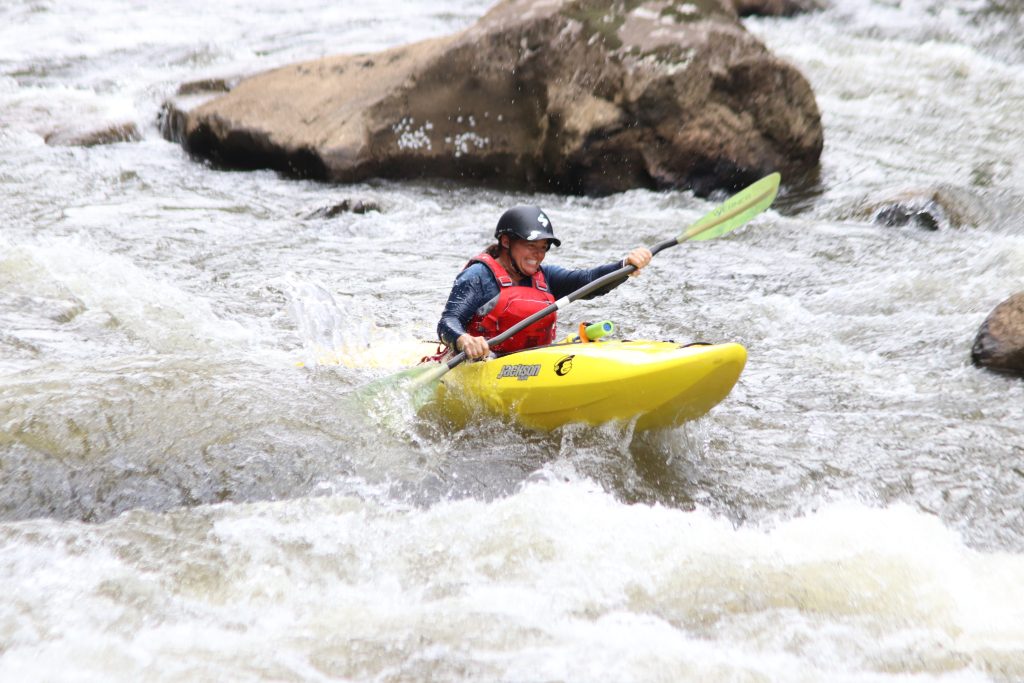
I am currently working toward something that scares me a little. Moving from paddling Class II whitewater into Class III and eventually touching Class IV. On paper, it sounds like a simple progression. In reality, it is a full change journey.
If you are not a paddler, here is the quick translation. Class I water is calm and forgiving. Class II introduces waves and obstacles, but gives you room to recover. Class III requires real skill, decision-making under pressure, and confidence in your ability to self-rescue. Class IV leaves very little margin for error. You do not accidentally paddle Class IV. You intentionally prepare for it.
That is why this experience has become such a powerful metaphor for how organizations approach change and why so many change efforts fail.
All organizations launch change initiatives, such as new strategic plans, departmental reorganizations, the implementation of new systems, the automation of manual processes, and the list goes on and on. They all begin with the same foundation; this change will not fail. Yet, way too many organizational change efforts fail because they are not fully implemented, adopted, or do not reach the desired outcome.
So, why do so many organizational change efforts fail?
Well, it’s complicated. There’s the human side, which we shared in this previous blog. It can also be the way the change project is structured, which we went over in another blog. In today’s article, we will deconstruct each fail point one by one.
Why wanting change is not enough
Years ago, I failed on the Nantahala River in North Carolina. It was supposed to be manageable whitewater, but I was unprepared. I swam. I panicked. I left feeling embarrassed and shaken. That experience stayed with me far longer than it should have.
I wanted to be a paddler who could handle Class II water, but wanting it did not make it true. The gap between desire and readiness is where change breaks down, whether you are holding a paddle or leading an organization.
This is where most organizations already stumble. They announce a change initiative without acknowledging that readiness is not automatic. They assume intent equals capability. It does not.

Failure point one: No vision leads to confusion
When I finally committed to moving from Class I to Class II, I did not just say, “I want to get better.” I created a clear vision. Paddle the Nantahala again and do it without swimming.
That vision mattered. It gave me something concrete to aim for. It also gave me a way to measure success.
Organizations skip this step constantly. They say things like “we are becoming more agile” or “we are restructuring for efficiency” without defining what success actually looks like. When there is no vision, people experience confusion. They do not know what river they are on or where they are headed.
In the Human Change Journey, this is where disruption begins. People feel unsettled because the destination is unclear.
Failure point two: No skills leads to anxiety
Vision alone does not keep you upright in whitewater. Skills do.
I knew that to paddle Class II confidently, I needed to learn how to wet exit safely. So I took pool lessons. I practiced flipping my kayak upside down and exiting calmly. It was uncomfortable. It was repetitive. It was necessary.
As I look ahead to Class III, the skill requirement increases. I will need a reliable roll. That means more practice, more instruction, and more humility.
In organizations, this is where anxiety explodes. Leaders declare a change but fail to invest in the skills required to succeed. People are expected to perform in new ways without being trained to do so. Anxiety is not resistance. Anxiety is a signal that people know they are unprepared.
This is the sense making phase of the Human Change Journey. People are asking, “Can I actually do this?” If the answer feels like no, fear takes over.
Failure point three: No incentives leads to resistance
Here is something paddlers understand intuitively. You do not paddle harder just because someone tells you to. You paddle harder because you trust the people with you and you believe the effort is worth it.
When I returned to the Nantahala, I did not go alone. I paddled with people who supported me, encouraged me, and believed I could do it even when I doubted myself. That social reinforcement mattered more than any external reward.
In organizations, incentives are often misunderstood. Leaders assume incentives mean money or titles. More often, incentives are psychological. Safety. Belonging. Credibility. Support.
When those are missing, resistance shows up. Not because people are unwilling, but because they do not feel it is safe to try.
This is where identity shift begins in the Human Change Journey. People are deciding whether this change aligns with who they are and whether the organization will support who they are becoming.
Failure point four: No resources leads to frustration
Progression in whitewater requires resources. Time to practice. Access to instruction. The right gear. You cannot shortcut these.
I could not roll a kayak without pool access. I could not build confidence without time on the water. Expecting otherwise would have set me up to fail.
Organizations do this all the time. They announce major change initiatives without allocating time, staffing, or tools. People are told to “make it work” on top of everything else.
Frustration is the predictable result. Not because people lack commitment, but because they lack capacity.
Therefore, in the Human Change Journey, this is where agency either forms or collapses. People either begin to see progress or disengage entirely.
Failure point five: No action plan leads to false starts
One of the biggest lessons kayaking taught me is that progression is not accidental. I did not wake up one day ready for Class II. I followed a progression plan. Flatwater. Pool sessions. Easier rivers. Trusted companions.
Change without a plan feels like thrashing in an eddy, expending energy without moving downstream.
Organizations often confuse intention with execution. They announce change, hold a kickoff meeting, and assume momentum will carry the rest. It will not.
Action plans create rhythm. They turn vision into movement. They make progress visible.
This is where internalization begins in the Human Change Journey. Change becomes real not because it was announced, but because it is practiced.
Treating change like whitewater
Finally, here is the hard truth. You would never put a paddler into Class III water without preparation. Yet organizations do this to their people all the time.
Change fails not because people are incapable, but because leaders underestimate what progression actually requires.
The leaders who succeed treat change like whitewater. They define the river clearly. They build skills before increasing difficulty. They create psychological safety. They allocate resources. They follow a plan.
Most importantly, they recognize that change is not merely operational. It is human.
Your next step
If you are leading a change right now and it feels harder than expected, you are not alone. You may simply be asking people to paddle water they were never prepared for.
That is exactly why we created the Stratavize Change Guide for Leaders. It brings together our Transformation Model, the Human Change Journey, and a practical approach to assess, activate, and align change in real organizations.
Before you ask your people to paddle harder, make sure they are ready for the river ahead.
Download the guide and start treating change like the progression it truly is.